
Choosing olive oil
The Advantages of Extra Virgin Olive Oil, and Where They Run Out
The top grade earns its price in flavour and in what has not been done to it. It also has three genuine limits, and a page that lists only the advantages is selling, not explaining.
The short answer
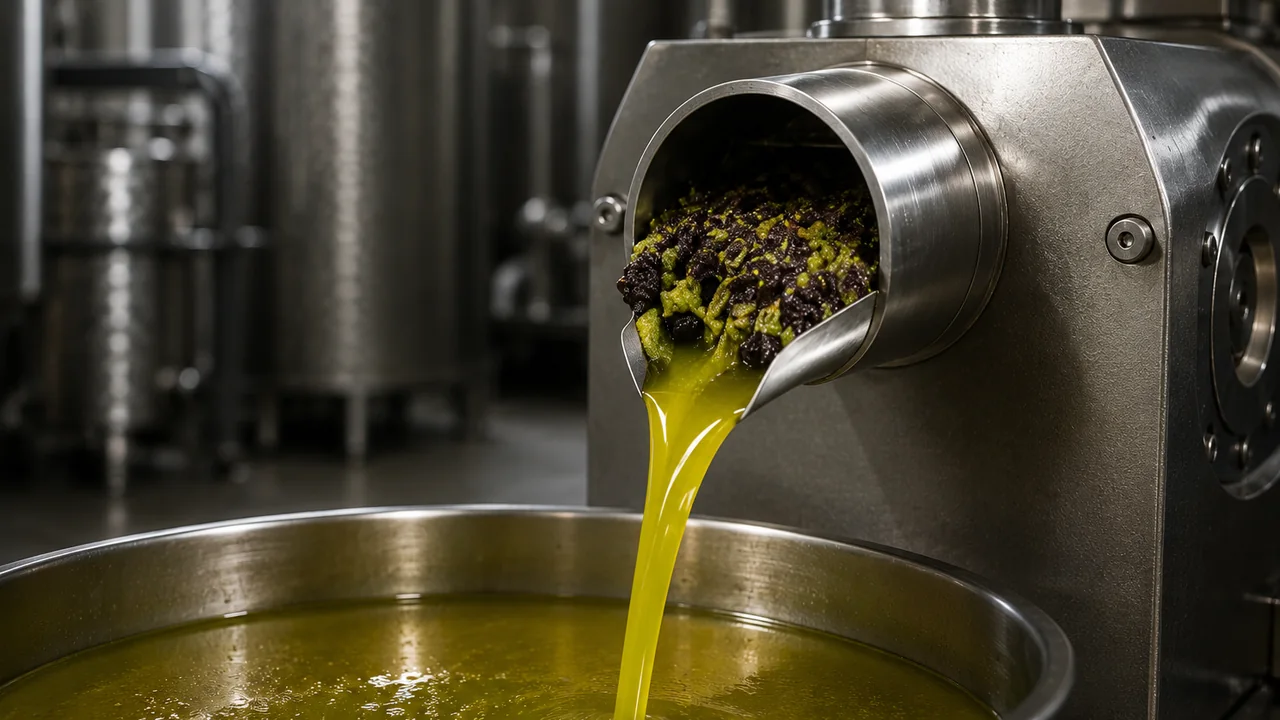
Extra virgin olive oil is a single-ingredient food, mechanically extracted with no heat and no solvents, so nothing has been stripped out and nothing added. Its advantages are flavour you can taste and versatility across cold and moderate-heat cooking. Its limits are price, a short life once opened, and high heat.
Most pages about the advantages of extra virgin olive oil are really lists of reasons to buy some. This one covers what the grade actually does in a kitchen, and then the column that is usually missing.
The short version: the advantage is that nothing has been done to the oil, and the limits follow from exactly the same fact.
What does extra virgin actually mean?
Extra virgin is a grade, not a marketing word. It means the oil came out of the fruit mechanically, without heat and without solvents, and passed a taste panel and a free acidity limit of 0.8 percent. Refined grades are made from oil that failed those tests and was then cleaned up industrially.
That single difference explains everything else. There is no processing step in which flavour, colour and aroma could have been removed, so they are still there. For the full grade ladder, see extra virgin versus pure olive oil.

Can you actually taste the difference?
Yes, and most obviously when the oil is not cooked. A fresh extra virgin oil is grassy or fruity in the nose, and it leaves a bitterness and a peppery catch at the back of the throat. A refined oil has almost no smell and no finish at all, which is exactly what refining is for.
That advantage is real on bread, in a dressing, over grilled fish or stirred through warm rice. It is largely wasted in a dish with a strong sauce, and lost completely in a deep fryer.
Why does one ingredient matter?
A bottle of extra virgin olive oil contains pressed olives and nothing else. No blend of unnamed oils, no solvent residue, no deodorising step, no additives. For a household that reads labels, that is unusually simple, and it is one of the few claims in this category that needs no qualification.
It also means the label can be checked. A grade, a harvest date and one named country of origin either appear on the bottle or they do not.
How versatile is it really?
More than its reputation suggests. Extra virgin olive oil smokes at roughly 190 to 210 degrees Celsius and ordinary home sauteing runs at 140 to 180, so it covers dressings, dipping, roasting, baking and most stovetop cooking with one bottle. The wok at full flame is where it stops.
A kitchen can genuinely run on this oil plus one cheap neutral oil for high-heat work. How to cook with olive oil goes dish by dish.
What are the real limits?
Three, and none of them is a secret. It costs several times what a refined cooking oil costs. It has a short useful life once opened, roughly two months before the flavour flattens. And it is the wrong tool above its smoke point, where you pay a premium for something the heat immediately removes.
| Advantage | The limit attached to it |
|---|---|
| Flavour survives because nothing was refined out | That flavour is the first thing heat takes back |
| One ingredient, checkable on the label | Nothing on a label proves what is inside the bottle |
| Works raw and at moderate heat | Not the oil for a wok at full flame or a deep fryer |
| Small bottles keep the oil fresh in use | Cost per litre is higher than a large bottle |
Is any of this a health argument?
Not on this page. Everything above is about cooking and about what is in the bottle. Diet is a separate subject with its own careful wording, and it is covered in the health benefits article, where the international claims are quoted with the hedges their authors attached to them.
Olive oil is a food, not a treatment for anything. If you have a diagnosed condition, the person to ask is your doctor or a registered dietitian.
Is it worth the money?
If most of what you do with oil is raw or moderate heat, yes, because that is where every advantage above is still intact when the food reaches the table. If most of what you do is deep-frying, buy a refined oil for the pot and a small extra virgin bottle for the plate.