
Buying olive oil
Which Olive Oil to Buy: Four Questions, in Order
A short question ladder for someone standing in front of a shelf. Each answer narrows the choice, and the last one lands on a grade and a size.
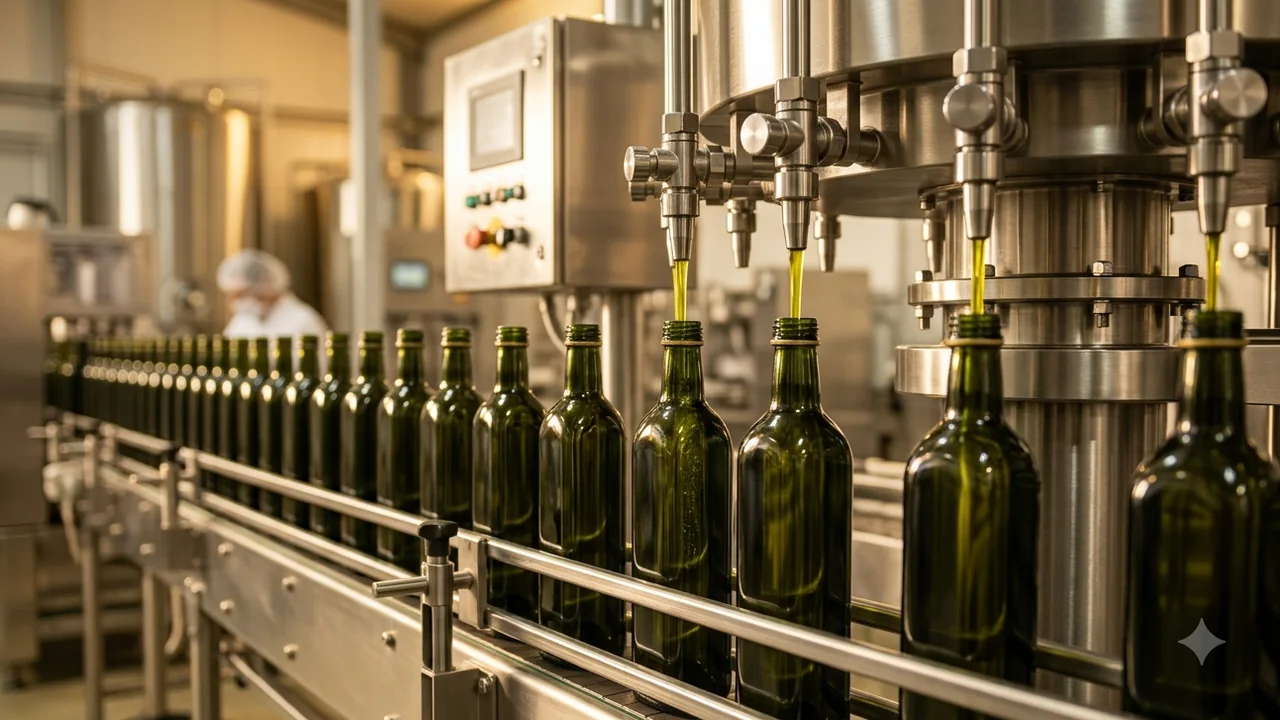
The short answer
Which olive oil to buy comes down to four questions asked in order: what will you mostly do with it, how fast will you get through it, are you buying for flavour or for volume, and can you check the label. Most households are better served by two oils than by one compromise bottle.
Standing in front of a shelf with eight bottles on it is not the moment for a grade lecture. It is the moment for a decision.
Four questions, asked in this order, will narrow the shelf to one or two bottles. The reasoning behind each is a link, not a paragraph.
Question one: what will you mostly do with it?
What you will mostly do with the oil decides the grade, and it is the only question that has to be answered first. If most of the use is raw or moderate heat, buy extra virgin. If most of it is a wok at full flame or deep-frying, buy a refined oil, because nothing else on this page will change that answer.
Most kitchens do some of both, which is why the honest answer for many households is two bottles rather than one.
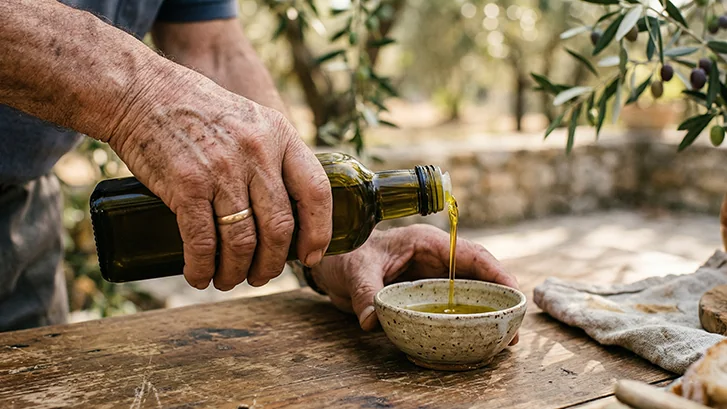
Question two: how fast will you get through it?
How fast you get through a bottle decides the size, and that is really a freshness question wearing a value disguise. An opened bottle holds its flavour for roughly two months. A larger bottle costs less per litre and is worse value if the last third has already flattened by the time you reach it.
So buy the size you will finish inside that window, not the size with the best headline price. What size olive oil bottle to buy works the arithmetic through.
Question three: flavour or volume?
If the oil is going on the plate, you are buying flavour and the newest harvest wins. If the oil is going into the pan in quantity, you are buying volume and freshness matters far less. Trying to satisfy both with one purchase is how people end up with an expensive bottle used for frying.
| If your answer is | Buy | In this size |
|---|---|---|
| Mostly raw: dressings, dipping, finishing | Extra virgin, newest harvest you can find | Small, so it stays fresh in use |
| Mixed: some raw, mostly moderate heat | Extra virgin | Whichever you finish in two months |
| Mostly high heat and volume | A refined cooking oil | Large, price per litre is the point |
| Both, honestly | One of each | Small extra virgin, large refined |
Question four: can you check the label?
Whatever the first three answers were, the bottle still has to say what it is. The words extra virgin olive oil in full, a date, one named country of origin, and glass dark enough to keep light out. A bottle missing all four is not a bargain, it is an unknown.
The longer version of this check, including a taste test, is in how to choose authentic extra virgin olive oil.
Why two bottles beats one compromise
Because a single bottle chosen to do everything does each job slightly badly and costs more overall. A cheap refined oil handles the frying that would have burned off everything you paid for, and a small extra virgin bottle reaches the table while it still tastes of something.
- Decide the dominant use, and let it pick the grade
- Pick the size you will finish in about two months
- Read the label for grade, date, origin and glass
- If your kitchen genuinely does both jobs, buy one of each
If you only buy one bottle
Buy a small extra virgin olive oil, and use it raw. That is where the difference between grades is unmistakable, where the quantities are spoonfuls rather than potfuls, and where a bottle gets finished before it flattens. Keep whatever you already fry with for frying.
It is a smaller purchase than most people expect and it answers the question the shelf was really asking.
The short answer
Extra virgin for anything raw or gently cooked, refined for anything hot and high-volume, and a size you will finish in two months. If that means two bottles, it means two bottles, and it will still cost less than one bottle used wrongly.