
Buying Guide
How to Choose Authentic Extra Virgin Olive Oil in Malaysia
Everything on the front of the bottle is marketing. This is how to read the back, run a two-minute taste test, and buy an olive oil that is what it says it is.

The short answer
To buy authentic extra virgin olive oil in Malaysia: check that the label says exactly "extra virgin olive oil", look for a harvest date and a single named country of origin, prefer dark glass or tin, be suspicious of a price far below the category, and taste it — real extra virgin oil is fruity, bitter and peppery, never flat or waxy.
Olive oil is one of the most adulterated foods in global trade. Not usually in a dramatic, dangerous way — more often it is a refined oil sold at extra virgin prices, an old oil sold as a new harvest, or a blend from four countries sold under an Italian-sounding name.
Malaysia imports all of its olive oil, which means the buyer here has less context than a shopper in Andalusia and more distance between the press and the shelf. The good news is that you do not need a laboratory. You need to know which four things on the label are meaningful, and you need two minutes and a spoon.
This is the checklist we use ourselves.
Why authenticity is a real problem, not a scare story
Extra virgin olive oil is expensive to produce: hand or careful mechanical harvest, pressing within hours, low yield, and no way to rescue a bad batch through refining. Refined oil is cheap to produce and nearly flavourless, which makes it easy to pass off once it is in a green bottle with a rustic label.
The categories are defined internationally — by the International Olive Council trade standard and the Codex Alimentarius standard for olive oils — but enforcement happens at the point of production and import, not in your kitchen. Which is why the label wording matters so much.
Step 1: Read the label properly
The grade wording is the only part that is regulated
Look for the exact phrase "extra virgin olive oil". Anything else is a different product, no matter how premium it sounds.
| What the label says | What it actually is |
|---|---|
| Extra virgin olive oil | Top grade. Mechanical extraction only, no defects, free acidity at or below 0.8%. |
| Virgin olive oil | Same extraction method, looser acidity limit and minor sensory defects allowed. |
| Olive oil / "Pure" olive oil | A blend of refined olive oil with a little virgin oil. Refined means heat and industrial processing. |
| Light / Extra light olive oil | Refined blend. "Light" describes colour and flavour. Identical calories to any other oil. |
| Olive pomace oil | Solvent-extracted from spent pulp and skins, then refined. The cheapest tier. |
| "Premium", "Gold", "Classic", "Imported" | Marketing. No legal meaning whatsoever. |
Harvest date beats expiry date
Olive oil is a fresh juice, not a preserved product. A best-before date tells you when the packer decided to stop guaranteeing it — usually 18 to 24 months after bottling, which may be a year after the olives were picked. A harvest date or crop year tells you the truth. Prefer the most recent harvest available; northern-hemisphere olives are typically picked between October and January.
Origin should be one place, named
A single country or region — Palestine, Jaén, Kalamata, Sfax — means someone is accountable for that oil. Phrasing like "packed in Italy", "bottled in the EU" or "blend of EU and non-EU olive oils" is legal and common, but it tells you the oil may come from several countries and several harvests, mixed for price stability rather than for taste.
Acidity and "first cold pressed", if stated
Free acidity is a lab measure of fat breakdown, written as a percentage. The extra virgin ceiling is 0.8%. Serious producers publish a much lower figure — Arabian Village tests below 0.028%. "First cold pressed" means the oil came from a single mechanical extraction without added heat; it is a real distinction from refined oil, though on its own it does not guarantee flavour.
What about certifications?
Organic marks, PDO/PGI region marks and halal recognition each tell you something narrow and specific. None of them is a substitute for grade, harvest date and origin. Be equally wary of the opposite error — assuming an oil is inferior because a small producer has not paid for a certification scheme.
Step 2: Judge the packaging
- Dark glass or tin. Light drives oxidation. A clear bottle sitting under retail lighting for months is an oil that has already aged.
- Sensible size. 250–500 ml for a household that finishes a bottle in weeks; larger tins only if you genuinely cook with volume. A part-used 3-litre jug is a slow disappointment.
- A proper seal. Tamper-evident closure, clean fill line, no residue or leakage around the neck.
- Real information on the back. Producer name and address, country of origin, grade, lot number. A back label with nothing but an importer sticker is a back label hiding something.
Step 3: Taste it — the two-minute home test
Professional tasters use a blue glass so colour cannot bias them. You can do a rough version at home, and it is by far the most revealing thing on this list.
- Pour about a tablespoon into a small glass and cup your hand over the top.
- Warm it against your palm for twenty or thirty seconds, then swirl.
- Uncover and smell. You are looking for green grass, fresh-cut leaf, green tomato, artichoke, sometimes green almond or apple.
- Sip a small amount, draw air in over it, and let it coat your mouth.
- Swallow and pay attention to the finish at the back of the throat.
The three positive attributes
- Fruity — the smell and taste of fresh olives. Anything from green and grassy to ripe and sweet.
- Bitter — a clean bitterness across the tongue, from the phenolic compounds.
- Pungent — the peppery catch that can make you cough. This is oleocanthal. It is a good sign, not a fault.
The defects that should send it back
- Rancid — old crayons, stale nuts, putty. The most common defect by far, and the sign of an oil that is simply too old.
- Fusty — a heavy, sweaty, fermented smell, from olives left in heaps too long before pressing.
- Musty or mouldy — damp cardboard, wet cupboard.
- Winey or vinegary — sharp, fermented, sour.
- Flat and greasy with no aroma at all — usually a refined oil, whatever the front label claims.
Step 4: Sanity-check the price
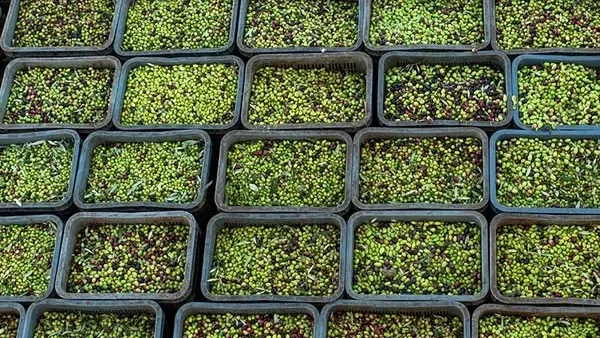
Real extra virgin olive oil has a cost floor. Olives must be harvested at the right moment, transported quickly, pressed within hours, and stored carefully — and roughly five to ten kilograms of olives produce a single litre of oil. When a bottle is priced far below every comparable extra virgin oil on the shelf, something in that chain was skipped.
Convert everything to price per litre before comparing, and compare like with like: extra virgin against extra virgin, not against a refined blend in a bigger bottle. Then weigh in origin, harvest year and packaging. The cheapest genuine extra virgin oil in a category is usually a reasonable buy; the one that is half the price of everything else is usually not in the same category at all.
Step 5: Buy from somewhere accountable
Where you buy affects what you get, because storage and stock rotation happen before you ever see the bottle.
- The brand or its appointed distributor. Fewest hands, clearest provenance, and someone who can answer a question about harvest date. Arabian Village is distributed in Malaysia by Berkat Madinah Store, a halal Arab food company established in 2010.
- Official marketplace stores. Shopee and TikTok Shop listings run by the brand or distributor, not by an unrelated reseller. Check the store name, not just the product photo.
- Halal grocers with fast turnover. A busy shelf is a fresh shelf. A dusty bottle in a quiet aisle has been ageing under the lights.
All the official Arabian Village channels are listed on our shop page, and you can contact us directly for retail or wholesale enquiries.
Step 6: Do not undo it at home
- Store in a dark cupboard, away from the stove. Heat and light are the enemies.
- Keep the cap on tight — oxygen degrades oil slowly but permanently.
- Do not decant into a clear jar on the counter, however good it looks.
- No refrigeration needed. Cloudiness in cold air is normal and harmless.
- Finish an opened bottle within about two months in Malaysia's warm, humid climate.
The 10-point checklist
- The label says exactly "extra virgin olive oil".
- There is a harvest date or crop year, and it is recent.
- Origin is a single named country or region.
- Free acidity is stated, and it is well under 0.8%.
- The bottle is dark glass or tin.
- The size matches how fast your household actually cooks.
- The back label names a real producer, not only an importer.
- The price is in the same range as other genuine extra virgin oils.
- It smells of fresh green fruit — and tastes fruity, bitter and peppery.
- You bought it from the brand, its distributor, or an official store.
The bottom line
Choosing authentic extra virgin olive oil in Malaysia comes down to four label facts — grade, harvest date, origin, acidity — one packaging check, and one taste test. Nothing on the front of the bottle is evidence of anything.
Do it once carefully and you will recognise a good oil by smell alone from then on. The peppery bite you learn to expect is the same compound the research keeps returning to, which is a neat coincidence: the oil that tastes most alive is generally the one worth buying.
Arabian Village is first cold pressed extra virgin olive oil from centuries-old Palestinian groves, hand-harvested and pressed within hours, with acidity tested below 0.028%. See the full product details, read why families trust us, or find where to buy.