
Origin & provenance
Palestinian olive oil: what makes it different
The groves, the Nabali olive and the autumn harvest behind Palestinian olive oil — and what single origin lets you verify that a multi-country blend does not.

The short answer
Palestinian olive oil comes from rain-fed groves on terraced hill country, planted mostly with the Nabali olive and picked by hand in autumn. Its real advantage over a multi-country blend is not a decree of quality but verifiability: one region, one harvest window, one importer you can question.
Search for palestinian olive oil from Malaysia and two very different bottles come back: one names a place on the front, the other admits in small print that it blends oils from more than one country. That gap is the subject here.
Arabian Village is Palestinian cold-pressed extra virgin olive oil, distributed in Malaysia by Berkat Madinah Store. Single origin is not decoration on that label — it is a claim narrow enough to be checked.
What makes Palestinian olive oil different?
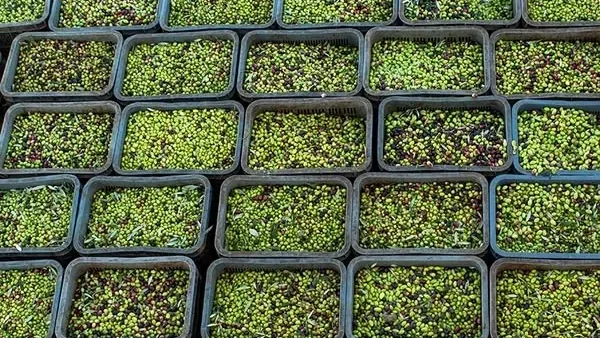
Palestinian olive oil comes from a narrow band of hill country with hot dry summers, wet winters, thin limestone soil and groves set along stone terraces. Most groves are rain-fed rather than irrigated, the fruit is hand-picked in autumn, and the olives are pressed close to where they grew.
No single element there is unique. The combination is, and so is a harvest that has stayed a village event rather than an industrial one.
Which olive varieties grow in Palestinian groves?
The dominant variety is the Nabali olive, often called Baladi, meaning local. Nabali Muhassan and Souri grow alongside it, and older Rumi trees appear in places. Nabali fruit gives an oil that reads green rather than sweet: grassy, faintly bitter, peppery in the throat.
- Aroma — cut grass and green leaf, sometimes tomato leaf
- Palate — green and lightly bitter, not buttery or nutty
- Finish — peppery in the throat, strongest in a recent harvest
- Colour — green-gold, deeper when the fruit was picked earlier
When is the Palestinian olive harvest?
The Palestinian olive harvest falls in autumn, broadly October into November, shifting with altitude and with how the rains came that year. It is short and it is social: families and neighbours working the same terraces. Fruit picked early gives greener, more bitter oil; fruit left longer, milder.
A harvest date therefore says more than a best-before date, which the bottler sets. It records when the fruit left the tree.
Why does single origin matter more than a blend?
Single origin means every olive in the bottle came from one defined place. A blend combines oil from several countries — legal, ordinary, and why the back label often reads as a list. The difference is not quality by decree; it is how much you can check.
| What you can ask | Single origin | Multi-country blend |
|---|---|---|
| Where the fruit grew | One named region | Several countries, unranked |
| Which season it came from | One harvest window | Seasons may be mixed |
| Which varieties are inside | Traceable to that region | Rarely stated |
| Who can answer questions | One importer, one line | Depends on the bottler |
What does the land itself do to the oil?
Rain-fed groves on terraced slopes carry less fruit per tree than irrigated orchards on flat ground, and the olives run smaller. The terraces exist because the hillsides are steep and the soil shallow; their walls hold what winter rain arrives. The trees then pass a dry summer unwatered.
Small plots and hand picking mean modest volumes and a short pressing window, so the oil is made in batches. Our single-origin sourcing page covers the supply side.
How do you buy Palestinian olive oil in Malaysia?
In Malaysia, Arabian Village is distributed by Berkat Madinah Store, which opened in 2010. The oil is sold at its two branches, Ampang Jaya and Batu Caves, the larger, and through Berkat Madinah's own Shopee storefront and TikTok Shop — the same seller, not resellers.
Prices are RM59.00 for 250 ml and RM103.00 for 500 ml, and a size costs the same whether you take the classic oil or a flavour from the infused collection such as wild thyme.
Origin is a claim you can test
Single origin earns attention for a plain reason: it can be falsified. One region, one harvest window, one importer to question. Ask where the fruit grew, when it was picked and who imported it — then compare the bottles and sizes.