
Olive oil basics
Olive oil vs pomace oil: what the grades on the label mean
Pomace oil, refined olive oil and extra virgin all start as the same fruit but leave the mill by very different routes, and this guide shows what changes at each step and how to read it off a Malaysian label.
The short answer
Pomace oil is not a lower grade of olive oil. It is pulled with solvent from the paste left over after pressing, then refined until it is neutral. Extra virgin comes from the fruit itself, mechanically, and keeps its taste. Pure, light and extra light are refined oils with a little virgin oil blended back.
Two bottles sit side by side on a Malaysian shelf. Both say olive oil. One costs several times the other, and the cheaper one carries a second word: pure, light, or pomace.
Those words are not decoration. Each names a different route out of the fruit, and the price follows the route.
What is pomace oil, and how is it different from olive oil?
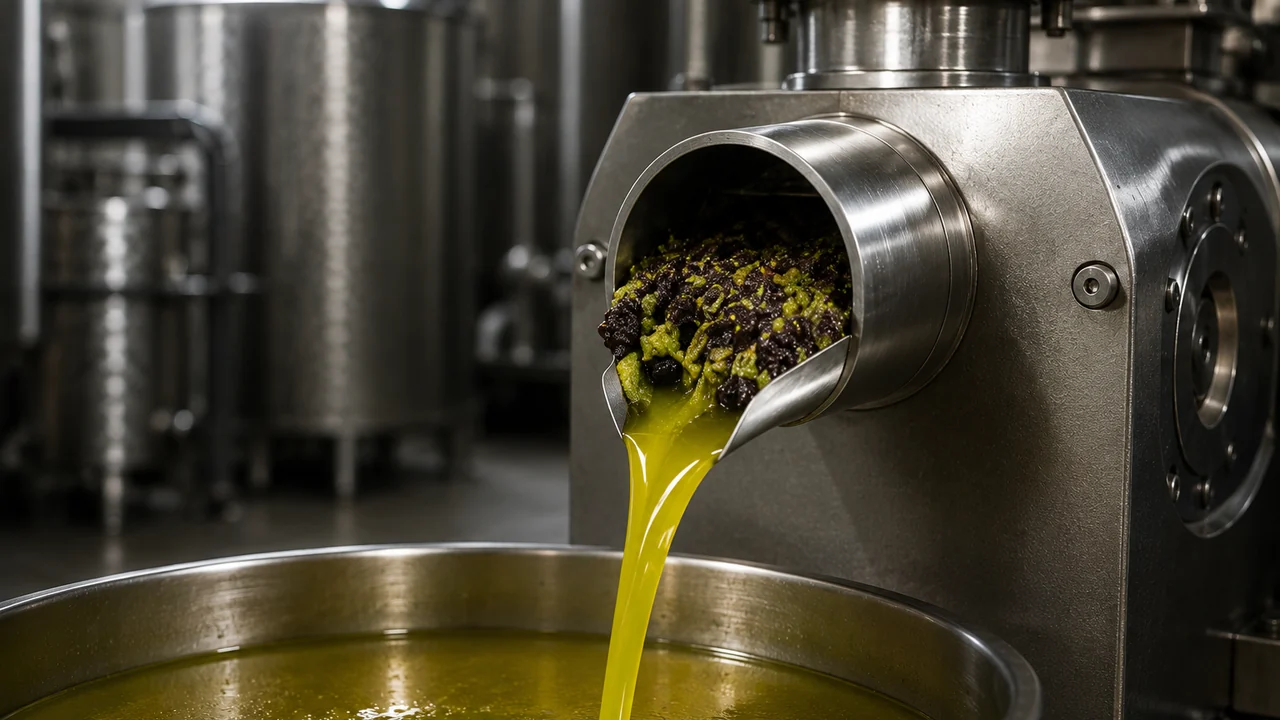
Pomace oil is made from what is left once the olives have already given up their oil. That cake of skins, pulp and crushed stones still holds a little oil, too little to press out. Pomace oil is what a second, chemical extraction recovers from it.
So the gap is not one of degree. It is a different raw material, which is why pomace oil is named separately on a label.
How pomace oil is extracted and refined
The wet pomace is dried, then washed with a food-grade solvent, usually hexane, which dissolves the last of the oil out of the solids. The solvent is evaporated off. What is recovered is crude and not edible, so it is refined with heat, alkali and filtering until it is pale and neutral.
Refining is the same rescue used on virgin oil that failed its grade. It strips the free fatty acids, and with them the aroma compounds behind the green smell and the peppery catch. Extraction itself is covered in what cold pressed olive oil really means.
What pure, light and extra light actually mean
None of the three is a step above virgin. Pure olive oil, often sold as plain olive oil, is refined oil with a little virgin oil blended back for taste and colour. Light and extra light describe how pale and mild the result is, not calories.
- Extra virgin — a grade earned on lab and taste checks.
- Virgin — same route, one step down, minor defects allowed.
- Pure or classic — refined oil with virgin blended back.
- Light and extra light — that blend, paler and milder.
- Pomace — a different raw material, solvent-extracted.
Olive oil vs pomace oil: the grades side by side
Read the table across, not down. The first column is what the oil is made from and how, the second is what that leaves in the bottle, and the third is where the price sits against the rest. None of it is about brand.
| Grade | How it is made | Taste | Price |
|---|---|---|---|
| Extra virgin | Fresh fruit, mechanical only | Fruity, bitter, peppery | Highest |
| Virgin | Same route, fruit less perfect | Milder, less clean | High |
| Refined | Faulty virgin oil, neutralised by heat | Almost none | Middle |
| Pure, light, extra light | Refined oil, some virgin blended back | Faint at most | Middle |
| Pomace | Leftover paste, solvent, then refining | Neutral | Lowest |
Where each grade belongs in a kitchen
Refined and pomace oils are bought for volume and neutrality: deep-frying, greasing trays, cooking where no oil flavour is wanted. Extra virgin is bought for the opposite reason. Its value is the taste, so it belongs where you can still taste it — finishing, dressing, dipping and gentle heat.
That is how to read the price. Arabian Village extra virgin is RM59.00 for 250 ml and RM103.00 for 500 ml, or RM236 and RM206 a litre. Pomace costs a fraction of that, because it does a fraction of the job. More in olive oil price in Malaysia.
How to tell which one is in the bottle in front of you
The grade has to be printed somewhere, so start with the words, not the glass. Colour tells you almost nothing: it follows the olive variety, the ripeness at harvest and the filtering. A deep green oil is not automatically extra virgin, and a pale one is not automatically refined.
- Find the grade in full, not just the words olive oil.
- Read pure, light and pomace as refined unless told otherwise.
- Prefer one named country of origin over a blend.
- Look for a harvest or best-before date, and dark glass.
- Compare price per litre, not per bottle.
More checks before you pay are in how to choose authentic extra virgin olive oil.
The short version
Olive oil vs pomace oil is not a good bottle against a bad one. They are two products with two jobs. Pomace is cheap, neutral fat from a by-product. Extra virgin is fruit juice, and you pay extra for flavour.
Read the grade before the price. Arabian Village is a single-origin Palestinian cold-pressed extra virgin olive oil.