
Cooking with olive oil
Olive Oil for Roasting Vegetables: How to Get Them to Actually Crisp
Most roasted vegetables come out of the oven soft and grey instead of browned at the edges. The fix is rarely the oven. It is how much oil goes on, how the tray is loaded, and when the salt lands.

The short answer
Coat vegetables in a thin film of oil, about a tablespoon per tray, not a pool. Spread them in one uncrowded layer so steam escapes, roast hot for watery vegetables and lower for dense ones, salt dense vegetables before and watery ones after, then finish with a raw drizzle once out.
A tray of roasted vegetables that comes out pale and soft instead of browned at the edges has usually not failed because of the oven. It has failed because of the oil and the tray: too little coating, too much crowding, or salt added at the wrong moment.
None of that needs more heat. It needs less vegetable per tray and a clearer idea of what each one wants.
How much oil actually belongs on the tray
A tray of cut vegetables needs a thin, even coating of olive oil, not a puddle at the bottom. For a full baking sheet, start with about a tablespoon and toss until every piece looks glossy rather than wet, adding more only if dry patches remain.
Too little oil and the cut surfaces dry out and char before they soften. Too much and the vegetables sit in a shallow fry instead of a roast. See the smoke point guide for how far extra virgin can be pushed.
Why a crowded tray is the real enemy of crisping
Vegetables piled two and three deep release water as they heat, and that water has nowhere to go in a crowded pan — it collects, and they steam in it instead of browning. One layer with visible gaps between pieces lets the moisture escape upward instead of pooling.
If the tray is covered edge to edge with no gaps, split the batch across two trays. A half-empty tray is usually the one that browns properly.
Oven temperature and roughly how long, by vegetable
Dense root vegetables want a lower oven and more time so the inside cooks through before the outside burns. Watery, quick-cooking vegetables want it hot and fast, so they brown before turning to mush. The table below is a starting point, not a fixed rule.
| Vegetable | Oven temperature | Roughly how long |
|---|---|---|
| Potatoes, carrots, beetroot | 190-200°C | 40-50 minutes |
| Pumpkin, sweet potato | 190-200°C | 35-45 minutes |
| Cauliflower, broccoli | 190-200°C | 25-30 minutes |
| Bell peppers, onions | 190-200°C | 20-25 minutes |
| Zucchini, eggplant | 180-200°C | 18-22 minutes |
| Cherry tomatoes, asparagus | 180-200°C | 12-18 minutes |
Cut pieces roughly the same size on one tray so they finish together, flipping halfway if one side browns faster.
When to salt: before the oven or after
Dense vegetables such as potatoes, carrots and pumpkin can take salt before they go in, since it has time to season through as they cook. Watery vegetables such as zucchini, eggplant and tomatoes are better salted after, since salt draws water out and an early hand slows the browning.
- Salt before. Dense roots, cauliflower, broccoli, onions.
- Salt after. Zucchini, eggplant, cherry tomatoes, mushrooms.
- Either works. Bell peppers and asparagus, since they hold little water.
Which vegetables want hot and fast versus low and slow
The split is about water content and density, not the vegetable's family. Thin, watery pieces want a hot oven and a short time so they brown before they collapse; thick, dense pieces want a gentler oven so the centre catches up before the outside burns.
- Hot and fast. Asparagus, cherry tomatoes, zucchini, thin green beans — in and out in under twenty minutes.
- Low and longer. Whole beetroot, large potato wedges, pumpkin chunks, whole garlic bulbs — closer to forty-five to fifty minutes.
The raw drizzle after the tray comes out
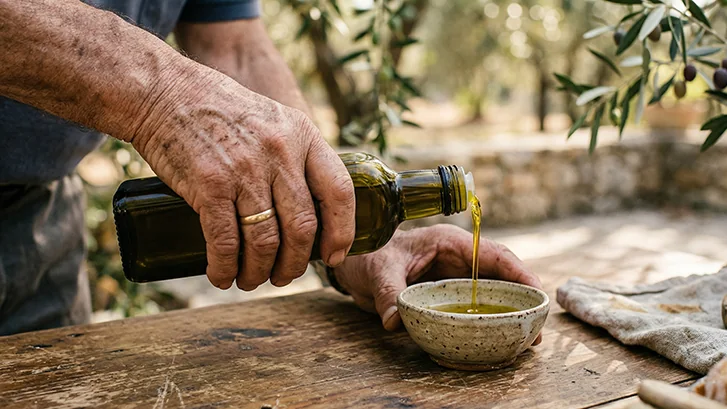
A second, raw pour of extra virgin olive oil after roasting is a different job from the oil the vegetables cooked in. The heated oil is a cooking medium; the finishing oil is tasted straight, so its own flavour — grassy, peppery, herbal — is what the diner notices first.
A teaspoon or two over the tray, added while the vegetables are still hot enough to carry the aroma, does more for the finished dish than any amount added before roasting. An infused oil such as rosemary and basil suits this step well, since none of its aroma is lost to the oven.
The short version
A thin coating, not a pool. One uncrowded layer. Hot and fast for watery vegetables, lower and longer for dense ones. Salt dense vegetables before, watery ones after, and finish with a raw drizzle once the tray is out.