
Cooking with olive oil
Olive Oil vs Sesame Oil: Two Strong Flavours, One Job Each
Olive oil and sesame oil are both strong-flavoured, both used raw and both used to cook, and a lot of Malaysian kitchens already keep both. This is where each one wins, not which one replaces the other.

The short answer
Olive oil and sesame oil are both strong, distinct-flavoured oils used raw and in cooking, but they rarely do the same job. Toasted sesame oil finishes a stir-fry or noodle dish off the heat; olive oil suits a raw drizzle or a moderate sauté. Most kitchens keep both rather than choosing one.
Two oils with strong, distinct flavours turn up in a lot of Malaysian kitchens at once, and neither erases the need for the other.
This is where each one earns its place: flavour, toasted sesame oil against the light version, raw finish against cooking, and how olive oil fits a kitchen that already keeps sesame oil.
Two flavours that do not compete
Extra virgin olive oil tastes of the fruit it was pressed from — grassy, peppery or mild depending on the harvest. Sesame oil tastes of the seed: a deep, toasted, nutty note when the seeds were roasted first, or a lighter one from raw seeds.
That is the reason to keep both. A dish built around sesame oil's toasted aroma falls flat with olive oil in its place, and hummus wants olive oil's fruit and pepper, not a nutty note.
Toasted and light sesame oil are two different products
Toasted sesame oil is pressed from roasted seeds and comes out dark amber with a strong, unmistakable aroma — a finishing oil, not a cooking one. Light or raw sesame oil is pressed from unroasted seeds, pale and mild, and holds up better to heat.
- Toasted sesame oil — dark, strongly aromatic, added at the end of cooking or as a raw finish.
- Light (raw) sesame oil — pale, mild, closer to a neutral oil in a pan.
- Buying 'sesame oil' without checking the label leads to a burnt dish or a bland one.
Poured on at the end, not cooked from cold
Toasted sesame oil is almost always finished rather than started: a few drops stirred through a stir-fry once the wok is off the heat, or drizzled over noodles just before serving. Cooked from cold, it turns bitter before the dish is done.
Olive oil works both ways: a raw drizzle carries its fruit and pepper, but it also takes a moderate sauté from the start — see olive oil smoke point for how much heat it takes.
Where olive oil fits a kitchen that already has sesame oil
Olive oil does not replace sesame oil in a kitchen that already keeps one — it does a different job. Sesame oil finishes a stir-fry with its own toasted note; olive oil finishes a salad or roasted vegetables with a grassy, peppery one.
Both earn a place on the same shelf. For which oil suits which dish more broadly, see how to cook with olive oil in a Malaysian kitchen.
Use this for that: a quick reference
Most of the choice comes down to timing: whether the oil needs to survive real heat in the pan, or whether its job is to sit raw on top of a finished dish.
| Job | Reach for | Why |
|---|---|---|
| Finishing a stir-fry off the heat | Toasted sesame oil | Aroma survives only a brief brush with heat |
| Cooking in a hot wok from cold | Light sesame oil or olive oil | Toasted sesame oil turns bitter cooked from cold |
| A raw drizzle over hummus or roasted vegetables | Olive oil | Carries its own fruit and pepper on top |
| A raw finish over noodles or a stir-fry | Toasted sesame oil | Its nutty aroma is the point |
| A sauté that should not overpower other flavours | Light sesame oil or a mild olive oil | Neither one's strongest note gets in the way |
How much of each you actually use
Toasted sesame oil is used a few drops at a time, so a small bottle lasts months. Olive oil is poured more freely and goes through faster once it earns a regular place in the same kitchen.
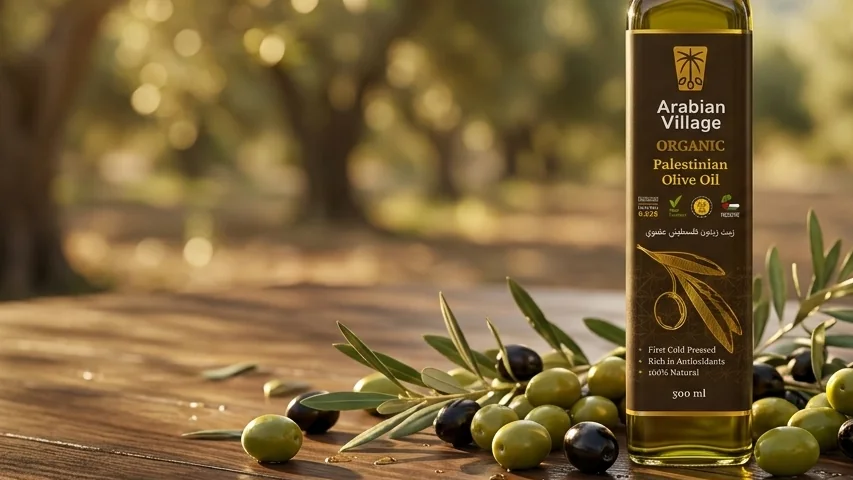
Arabian Village extra virgin olive oil comes in 250 ml and 500 ml, sold in Malaysia only through Berkat Madinah Store — two branches in Selangor, plus the seller's own Shopee and TikTok Shop counters. See the products page for sizes and pricing.
The short version
Keep both bottles for what each does best: sesame oil, toasted especially, for a raw or barely-heated finish; olive oil for everything from a raw drizzle to a moderate sauté. Neither replaces the other — they are different tools for the same kitchen.